
Integration of Smart Glasses Technology in Emergency Medical Services: A Literature Review
A Literature Review
DOI:
https://doi.org/10.33005/jdiversemedres.v3i6.359Keywords:
Smart glasses, Emergency Medical Services, Augmented Reality, Triage accuracy, Disaster responseAbstract
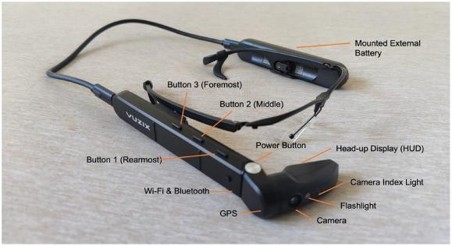
In today's digital era, wearable technologies such as Augmented Reality (AR)-based smart glasses offer significant potential to improve the efficiency and accuracy of EMS emergency response. The objective of this study was to assess the effectiveness of smart glasses in improving the speed and accuracy of triage and communication during mass casualty response. The method used was a systematic literature review with data analysis from various relevant recent studies, including simulations and field studies. The results showed that the use of smart glasses can increase the triage accuracy rate by up to 98.3%, compared to 78-79% for manual methods, and reduce triage time from an average of 72.4 seconds to 23.5 seconds (p < 0.001). Furthermore, this technology improves team coordination and real-time communication, contributing to an increase in operational efficiency of up to 30%. The discussion revealed that despite challenges such as training requirements and data privacy issues, the benefits of smart glasses are significant in improving the success of emergency response and rapid response, potentially revolutionizing the EMS system. The conclusion of this study is that AR-based smart glasses consistently improve the accuracy and efficiency of triage and communication, and if implemented with adequate training and a robust data security system, this technology could be a major innovation in supporting a more effective and rapid EMS response
Downloads
References
Zhang Z, Bai E, Xu Y, Stepanian A, Kutzin JM, Adelgais K, et al. A smart glass telemedicine application for prehospital communication: user-centered design study. J Med Internet Res. 2024;26(1):e53157. doi:10.2196/53157.
Apiratwarakul K, Cheung LW, Pearkao C. Smart glasses with augmented reality workflow; a modern tool for triage in mass casualty incidents. Arch Acad Emerg Med. 2025;13(1):e15. doi:10.22037/aaemj.v13i1.2661.
Zhang Z, Bai E, Stepanian A, Jagannath S, Park SY. Touchless interaction for smart glasses in emergency medical services: user needs and experiences. Int J Hum Comput Interact. 2025;41(5):2984-3003. doi:10.1080/10447318.2024.2328917.
Syaefulloh R, Priyatin W, Kriswanto SH, et al. Literature review tinjauan pelaksanaan pemeliharaan berkas rekam medis pada rumah sakit di bagian filling. J Inf Syst Public Health. 2024;1(1):1-15.
Apiratwarakul K, Cheung LW, Tiamkao S, Phungoen P, Tientanopajai K, Taweepworadej W, et al. Smart glasses: a new tool for assessing the number of patients in mass-casualty incidents. Prehosp Disaster Med. 2022;37(4):480-4. doi:10.1017/S1049023X22000929.
Apiratwarakul K, Khemtong S, Cheung LW, Pearkao C, Ienghong K. Enhancing emergency medical services with smart glasses technology for optimal ambulance positioning in simulated critical patient care scenarios. J Multidiscip Healthc. 2025;18:4309-16. doi:10.2147/JMDH.S535090.
Apiratwarakul K, Cheung LW, Ienghong K. Impact of smart glasses on patient care time in emergency medical services ambulance. Prehosp Disaster Med. 2023;38(6):735-9. doi:10.1017/S1049023X23006489.
Zhang Z, Luo X, Harris R, George S, Finkelstein J. Hands-free electronic documentation in emergency care work through smart glasses. In: Lecture Notes in Computer Science. Springer; 2022. p. 314-31. doi:10.1007/978-3-030-96960-8_21.
Zhang Z, Joy K, Harris R, Ozkaynak M, Adelgais K, Munjal K. Applications and user perceptions of smart glasses in emergency medical services: semistructured interview study. JMIR Hum Factors. 2022;9(1):e30883. doi:10.2196/30883.
Zhang Z, Babu NARR, Adelgais K, Ozkaynak M. Designing and implementing smart glass technology for emergency medical services: a sociotechnical perspective. JAMIA Open. 2022;5(4):ooac113. doi:10.1093/jamiaopen/ooac113.
Aranda-García S, Barrio-Cortes J, Fernández-Méndez F, Otero-Agra M, Darné M, Herrera-Pedroviejo E, et al. Dispatcher-assisted BLS for lay bystanders: a pilot study comparing video streaming via smart glasses and telephone instructions. Am J Emerg Med. 2023;71:163-8. doi:10.1016/j.ajem.2023.06.035.
Jiang X, Xia B, Ansari MM, Jiang H, Qi J, Zhang Z, et al. Evaluating the effectiveness of smart glasses in reducing patient care time in emergency departments: cohort study from the Hangzhou Asian Games. JMIR Form Res. 2025;9:e65617. doi:10.2196/65617.
Follmann A, Ruhl A, Gösch M, Felzen M, Rossaint R, Czaplik M. Augmented reality for guideline presentation in medicine: randomized crossover simulation trial for technically assisted decision-making. JMIR mHealth uHealth. 2021;9(10):e17472. doi:10.2196/17472.
AMA XpertEye. AMA supports the Medical Emergency training program organized by French Professor Pujo in Indonesia [Internet]. 2022 [cited 2025 Nov 5]. Available from: https://blog.amaxperteye.com/ama-supports-the-medical-emergency-training-program-organized-by-french-professor-pujo-in-indonesia
Downloads
Published
How to Cite
Issue
Section
License
Copyright (c) 2026 Journal of Diverse Medical Research : Medicosphere

This work is licensed under a Creative Commons Attribution 4.0 International License.
CC Attribution 4.0





 This journal applies the Creative Commons Attribution 4.0 International License (CC BY 4.0), which permits unrestricted use, distribution, and reproduction in any medium, provided the original author and source are properly credited.