New Insights into Pathophysiology, Hearing Loss, Efficiency, Height, Kidney Growth Complications, Treatment and Other Alternatives in β Thalassemia Patients
Review
DOI:
https://doi.org/10.33005/jdiversemedres.v3i9.379Keywords:
beta thalassemia, growth impairment, hearing loss, Pathophysiology, renal complicationsAbstract
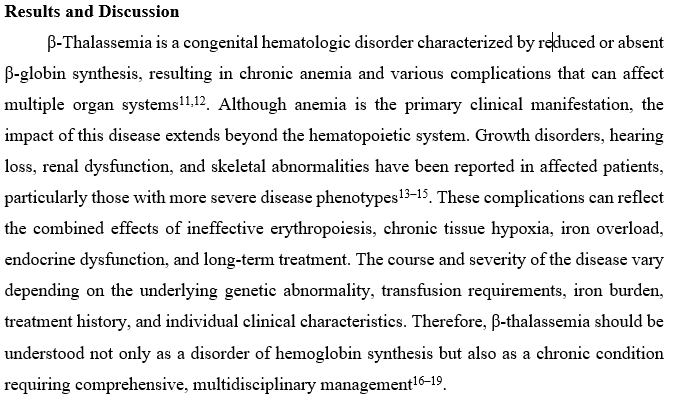
Beta-thalassemia is a common autosomal recessive hemoglobin disorder and a significant global health concern, particularly in tropical regions. Southeast Asia accounts for approximately 50% of the world’s thalassemia carriers. The disease results from mutations in the β-globin gene that disrupt hemoglobin synthesis, causing an imbalance in α and β-globin chain production. This imbalance contributes to ineffective erythropoiesis, chronic anemia, tissue hypoxia, compensatory hematopoietic expansion, and iron overload. This narrative literature review examined English language publications retrieved from PubMed, Google Scholar, and the Cochrane Library to explore the pathophysiology, clinical complications, and therapeutic approaches associated with β-thalassemia. β-thalassemia might be associated with impaired growth, hearing loss, renal dysfunction, and reduced bone mineral density. These complications can arise from disease-related mechanisms, iron overload, and treatment-related factors. Conventional management incudes blood transfusion and iron chelation, while emerging therapies, such as luspatercept, can reduce transfusion requirements in eligible patients. Early detection and genetic counseling are also important components of disease prevention. Understanding the pathophysiology and clinical manifestations of β-thalassemia is essential for optimizing disease management. Appropriate monitoring, individualized treatment, and preventive strategies also can help reduce complications and improve patient outcomes.
Downloads
References
Galanello R, Origa R. Beta-thalassemia. Orphanet J Rare Dis 2010;5(1):11; doi: 10.1186/1750-1172-5-11.
Shafique F, Ali S, Almansouri T, et al. Thalassemia, a human blood disorder. Brazilian J Biol 2023;83; doi: 10.1590/1519-6984.246062.
Sanchez-Villalobos M, Blanquer M, Moraleda JM, et al. New Insights Into Pathophysiology of β-Thalassemia. Front Med 2022;9; doi: 10.3389/fmed.2022.880752.
Arab-Zozani M, Kheyrandish S, Rastgar A, et al. A Systematic Review and Meta-Analysis of Stature Growth Complications in β-thalassemia Major Patients. Ann Glob Heal 2021;87(1):48; doi: 10.5334/aogh.3184.
Ngim CF, Lai NM, Hong JY, et al. Growth hormone therapy for people with thalassaemia. Cochrane Database Syst Rev 2017; doi: 10.1002/14651858.CD012284.pub2.
Tartaglione I, Carfora R, Brotto D, et al. Hearing Loss in Beta-Thalassemia: Systematic Review. J Clin Med 2021;11(1):102; doi: 10.3390/jcm11010102.
Romadhon PZ, Ashariati A, Bintoro SUY, et al. Markers of Renal Complications in Beta Thalassemia Patients with Iron Overload Receiving Chelation Agent Therapy: A Systematic Review. J Blood Med 2022;Volume 13:725–738; doi: 10.2147/JBM.S387416.
Cianciulli P. Iron Chelation Therapy in Thalassemia Syndromes. Mediterr J Hematol Infect Dis 2009; doi: 10.4084/MJHID.2009.034.
Motta I, Bou-Fakhredin R, Taher AT, et al. Beta Thalassemia: New Therapeutic Options Beyond Transfusion and Iron Chelation. Drugs 2020;80(11):1053–1063; doi: 10.1007/s40265-020-01341-9.
Dighriri IM, Alrabghi KK, Sulaiman DM, et al. Efficacy and Safety of Luspatercept in the Treatment of β-Thalassemia: A Systematic Review. Cureus 2022; doi: 10.7759/cureus.31570.
Sadiq IZ, Abubakar FS, Usman HS, et al. Thalassemia: Pathophysiology, Diagnosis, and Advances in Treatment. Thalass Reports 2024;14(4):81–102; doi: 10.3390/thalassrep14040010.
Dordevic A, Mrakovcic-Sutic I, Pavlovic S, et al. Beta thalassemia syndromes: New insights. World J Clin Cases 2025;13(10); doi: 10.12998/wjcc.v13.i10.100223.
Ye L, Lai D, Tai J. The association between anemia and sensorineural hearing loss: A review. Medicine (Baltimore) 2024;103(44):e40326; doi: 10.1097/MD.0000000000040326.
Durrani J, Groarke EM, Sekeres MA. Bone marrow failure syndromes across the age spectrum: diagnostic and therapeutic principles. eClinicalMedicine 2026;99:104139; doi: 10.1016/j.eclinm.2026.104139.
Carullo N, Sorbo D, Faga T, et al. Anemia and Mineral Bone Disorder in Kidney Disease Patients: The Role of FGF-23 and Other Related Factors. Int J Mol Sci 2024;25:12838; doi: 10.3390/ijms252312838.
Taher A, Musallam K, Cappellini M. Guidelines for the Management of Non-Transfusion-Dependent β-Thalassaemia [Internet]. 3rd ed. Nicosia (Cyprus): Thalassaemia International Federation; 2023.
Cappellini MD, Porter JB, Viprakasit V, et al. A paradigm shift on beta-thalassaemia treatment: How will we manage this old disease with new therapies? Blood Rev 2018;32(4):300–311; doi: 10.1016/j.blre.2018.02.001.
Sheth S. Thalassemia Syndromes and Other Hemoglobinopathies. In: American Society of Hematology Self-Assessment Program, Ninth Edition American Society of HematologyWashington, DC; 2025; pp. 105–123; doi: 10.1182/ashsap9.chapter10.
Shash H. Non-Transfusion-Dependent Thalassemia: A Panoramic Review. Medicina (B Aires) 2022;58(10):1496; doi: 10.3390/medicina58101496.
Syifa Putri Mutiara Kansya, Fitri Asymida, Armaidi Darmawan, et al. Association Between Nutritional Status and Anemia Among Under-Five Children at Abdul Manap Regional Hospital, Jambi. OBAT J Ris Ilmu Farm dan Kesehat 2026;4(4):111–123; doi: 10.61132/obat.v4i4.2358.
Marantika H, Meihartati T, Sulistyoroni C, et al. Science Midwifery The relationship between nutritional status and anemia in children aged 36-59 months with developmental problems. Sci Midwifery 2024;12(1):2721–9453.
Amelia P, Kannady J, Lubis NA, et al. Anemia incidence and nutritional status in children with uncorrected congenital heart disease at a teaching hospital in a developing country. Hear Sci J 2026;7(3):62–68; doi: 10.21776/ub.hsj.2026.007.03.10.
Hammad M, Fardoos S, Shakoor K, et al. Iron Overload and Endocrine Dysfunction in Adults with Transfusion-Dependent Beta-Thalassemia and Growth Retardation: A Correlational Study. Thalass Reports 2026;16(1):5; doi: 10.3390/thalassrep16010005.
Palmer WC, Vishnu P, Sanchez W, et al. Diagnosis and Management of Genetic Iron Overload Disorders. J Gen Intern Med 2018;33(12):2230–2236; doi: 10.1007/s11606-018-4669-2.
Coates TD. Iron overload in transfusion-dependent patients. Hematology 2019;2019(1):337–344; doi: 10.1182/hematology.2019000036.
Shander A, Cappellini MD, Goodnough LT. Iron overload and toxicity: the hidden risk of multiple blood transfusions. Vox Sang 2009;97(3):185–197; doi: 10.1111/j.1423-0410.2009.01207.x.
Rivella S. Iron metabolism under conditions of ineffective erythropoiesis in β-thalassemia. Blood 2019;133(1):51–58; doi: 10.1182/blood-2018-07-815928.
Prahasanti K, Ashariati A, Herawati L, et al. Ineffective Erythropoiesis Markers in β-Thalassemia: A Systematic Review. J Clin Med 2025;15(1):308; doi: 10.3390/jcm15010308.
Rivella S. -thalassemias: paradigmatic diseases for scientific discoveries and development of innovative therapies. Haematologica 2015;100:418–430; doi: 10.3324/haematol.2014.114827.
Feldt-Rasmussen U, Klose M. Adult Growth Hormone Deficiency- Clinical Management. [Updated 2022 May 23]. In: Feingold KR, Adler RA, Ahmed SF, et Al., Editors. (Endotext [Internet]. ed). South Dartmouth (MA): MDText.com, Inc.; n.d.
Halas JG, Grimberg A. Dilemmas of growth hormone treatment for GH deficiency and idiopathic short stature: defining, distinguishing, and deciding. Minerva Pediatr 2020;72(3); doi: 10.23736/S0026-4946.20.05821-1.
Yang Y, Ge L, Liu F, et al. Efficacy of Recombinant Human Growth Hormone on Glucocorticoid-Induced Short Stature in Children: A Retrospective Controlled Study. Horm Res Paediatr 2026;1–9; doi: 10.1159/000550406.
Sobhani S, Rahmani F, Rahmani M, et al. Serum ferritin levels and irregular use of iron chelators predict liver iron load in patients with major beta thalassemia: a cross-sectional study. Croat Med J 2019;60(5):405–413; doi: 10.3325/cmj.2019.60.405.
Taher A, Musallam K, Hoffbrand A. Current Strategies in the Assessment of Iron Overload. Eur J Clin Med Oncol 2011;3.
Porcar-Gozalbo N, López-Zamora M, Valles-González B, et al. Impact of Hearing Loss Type on Linguistic Development in Children: A Cross-Sectional Study. Audiol Res 2024;14(6):1014–1027; doi: 10.3390/audiolres14060084.
Moeller MP. Current State of Knowledge: Psychosocial Development in Children with Hearing Impairment. Ear Hear 2007;28(6):729–739; doi: 10.1097/AUD.0b013e318157f033.
Casoojee A, Khoza-Shangase K, Kanji A. Communication Outcomes of Children with Hearing Loss: A Comparison of Two Early Intervention Approaches. Audiol Res 2025;15(2):27; doi: 10.3390/audiolres15020027.
Srichairatanakool S, Paradee N, Pokharel B, et al. Iron Overload-Associated Oxidative Stress and Immune Cell Dysfunction in Thalassemia: Integrative Analysis of Hematological, Biochemical, and Flow Cytometric Biomarkers. Antioxidants 2026;15(4):482; doi: 10.3390/antiox15040482.
Chao Y-H, Wu K-H, Lin C-Y, et al. Audiologic and vestibular assessment in patients with β-thalassemia major receiving long-term transfusion therapy. Pediatr Blood Cancer 2013;60(12):1963–1966; doi: 10.1002/pbc.24699.
Bakr A, Al-Tonbary Y, Osman G, et al. Renal complications of beta-thalassemia major in children. Am J Blood Res 2014;4(1):1–6.
Mallat NS, Mallat SG, Musallam KM, et al. Potential mechanisms for renal damage in beta-thalassemia. J Nephrol 2013;26(5):821–828; doi: 10.5301/jn.5000253.
Thongsaen P, Tonsawan P, Wanitpongpun C, et al. Clinical features and risk factors of renal dysfunctions in thalassemic patients. Int Urol Nephrol 2023;55(7):1779–1785; doi: 10.1007/s11255-023-03506-3.
Obeagu EI. Iron homeostasis and health: understanding its role beyond blood health – a narrative review. Ann Med Surg 2025;87(6):3362–3371; doi: 10.1097/MS9.0000000000003100.
Alobaidi S. Emerging Biomarkers and Advanced Diagnostics in Chronic Kidney Disease: Early Detection Through Multi-Omics and AI. Diagnostics 2025;15(10):1225; doi: 10.3390/diagnostics15101225.
Fan H, Zhao Y, Sun M, et al. Urinary neutrophil gelatinase-associated lipocalin, kidney injury molecule-1, N-acetyl-β-D-glucosaminidase levels and mortality risk in septic patients with acute kidney injury. Arch Med Sci 2018;14(6):1381–1386; doi: 10.5114/aoms.2018.79006.
Bolignano D, Donato V, Coppolino G, et al. Neutrophil Gelatinase–Associated Lipocalin (NGAL) as a Marker of Kidney Damage. Am J Kidney Dis 2008;52(3):595–605; doi: 10.1053/j.ajkd.2008.01.020.
Rosanio FM, Borgia G, Ferone E, et al. Advancing Insights into Biomarkers in Congenital Anomalies of the Kidney and Urinary Tract: A Scoping Review. Cells 2026;15(12):1083; doi: 10.3390/cells15121083.
Mahmoud AA, Elian DM, Abd El Hady NM, et al. Assessment of Subclinical Renal Glomerular and Tubular Dysfunction in Children with Beta Thalassemia Major. Children 2021;8(2):100; doi: 10.3390/children8020100.
Alburayh KAS, Emara AM, Elgharabawy RM. Iron Chelation Therapy in Iron Overload Disorders: A Systematic Review with Narrative Synthesis of Bioenergetic Dysfunction, Oxidative Stress, and Biomarker-Guided Management. Int J Mol Sci 2026;27(19):8657; doi: 10.3390/ijms27198657.
Nienhuis AW, Nathan DG. Pathophysiology and Clinical Manifestations of the -Thalassemias. Cold Spring Harb Perspect Med 2012;2(12):a011726–a011726; doi: 10.1101/cshperspect.a011726.
Voskou S, Aslan M, Fanis P, et al. Oxidative stress in β-thalassaemia and sickle cell disease. Redox Biol 2015;6:226–239; doi: 10.1016/j.redox.2015.07.018.
Lin S, Zheng Y, Chen M, et al. The interactions between ineffective erythropoiesis and ferroptosis in β-thalassemia. Front Physiol 2024;15; doi: 10.3389/fphys.2024.1346173.
Pinto V, Forni G. Management of Iron Overload in Beta-Thalassemia Patients: Clinical Practice Update Based on Case Series. Int J Mol Sci 2020;21(22):8771; doi: 10.3390/ijms21228771.
Wong P, Fuller PJ, Gillespie MT, et al. Bone Disease in Thalassemia: A Molecular and Clinical Overview. Endocr Rev 2016;37(4):320–346; doi: 10.1210/er.2015-1105.
Valderrábano RJ, Wu JY. Bone and blood interactions in human health and disease. Bone 2019;119:65–70; doi: 10.1016/j.bone.2018.02.019.
Madan U, Bhasin H, Dewan P, et al. Improving Ineffective Erythropoiesis in Thalassemia: A Hope on the Horizon. Cureus 2021; doi: 10.7759/cureus.18502.
Musallam KM, Taher AT. Luspatercept: a treatment for ineffective erythropoiesis in thalassemia. Hematology 2024;2024(1):419–425; doi: 10.1182/hematology.2024000567.
Longo F, Tesio N, Piolatto A, et al. Luspatercept for the Treatment of β-Thalassemia: from Preclinical Research to Clinical Practice and Beyond. Futur Rare Dis 2021;1(4); doi: 10.2217/frd-2021-0012.
Alhajahjeh A, Woite NL, Rolles B, et al. Luspatercept for patients with lower-risk myelodysplastic syndromes/neoplasms: a systematic review and meta-analysis. Blood Adv 2025;9(24):6511–6523; doi: 10.1182/bloodadvances.2025017611.
Tsvirko KS, Tsvetkov NY, Morozova E V. Luspatercept in the treatment of patients with lower-risk myelodysplastic neoplasms. Oncohematology 2026;21(3):49–57; doi: 10.17650/1818-8346-2026-21-3-49-57.
Downloads
Published
How to Cite
Issue
Section
License
Copyright (c) 2026 Journal of Diverse Medical Research : Medicosphere

This work is licensed under a Creative Commons Attribution 4.0 International License.
CC Attribution 4.0







 This journal applies the Creative Commons Attribution 4.0 International License (CC BY 4.0), which permits unrestricted use, distribution, and reproduction in any medium, provided the original author and source are properly credited.