
Technological Innovations for Efficient Disaster Management and Healthcare Response
A Literature Review
DOI:
https://doi.org/10.33005/jdiversemedres.v3i2.230Keywords:
Disaster technological innovations, disasters information systems, disaster management; healthcareAbstract
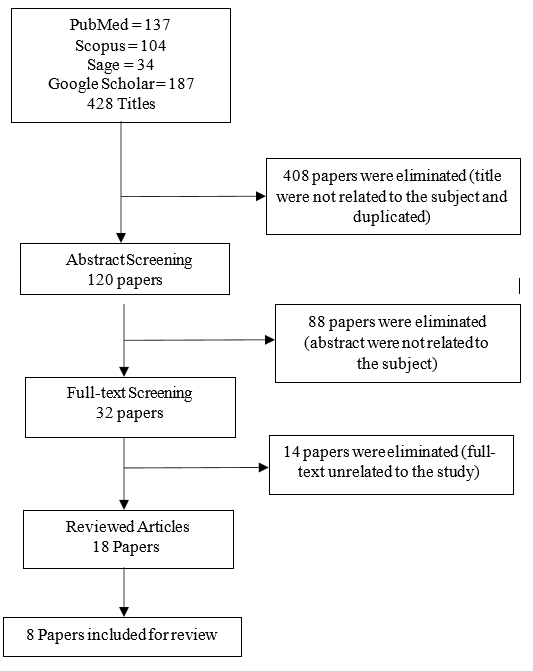
Disasters pose significant challenges to global health systems. Traditional methods of disaster management often struggle with efficient resource allocation and communication, especially in densely populated metropolitan areas. Technological innovations, such as GIS, UAVs, and VR, offer new opportunities to address these challenges. This study assesses the combined impact of technologies on improving healthcare service delivery and resource management during disasters, particularly in urban environments. A systematic review was conducted using the PRISMA-ScR framework. The research identified and analyzed studies from databases such as PubMed, Scopus, Sage Journals, and Google Scholar, focusing on technology-based disaster management interventions between 2020 and 2024. The review included eight studies that demonstrated significant improvements in disaster preparedness and response through the use of technologies. These technologies enhanced real-time decision-making, reduced response times, and improved the allocation of healthcare resources. However, the studies also highlighted issues with scalability, interoperability, and the lack of real-world testing. The integration of technologies has the potential to revolutionize disaster management practices. Despite the advancements, further research is needed to address the scalability and operational challenges that limit the full deployment of these technologies in real-world disaster scenarios.
Downloads
References
World Health. Climate Change and Health [Internet]. World Health Organization. 2020. Available from: https://www.who.int/news-room/fact-sheets/detail/climate-change-and-health
Jung Y. Virtual Reality Simulation for Disaster Preparedness Training in Hospitals: Integrated Review. J Med Internet Res [Internet]. 2022 Jan 28;24(1):e30600. Available from: https://www.jmir.org/2022/1/e30600
Mitropoulos S, Mitsis C, Valacheas P, Douligeris C. An online emergency medical management information system using mobile computing. Appl Comput Informatics [Internet]. 2025 Jan 30;21(1/2):65–77. Available from: http://www.emerald.com/aci/article/21/1-2/65-77/1241895
Tunaligil V. Developing a Geographic Information System for health institutes in earthquake-Prone metropolitan cities: A Methodological Approach. Med Sci Discov [Internet]. 2024 Sep 4;11(9):260–8. Available from: https://medscidiscovery.com/index.php/msd/article/view/1191
Rodríguez-Espíndola O, Albores P, Brewster C. GIS and Optimisation: Potential Benefits for Emergency Facility Location in Humanitarian Logistics. Geosciences [Internet]. 2016 Mar 29;6(2):18. Available from: https://www.mdpi.com/2076-3263/6/2/18
Rudiastuti AW, Suryanegara E, Wirawan A, Purwanto B, Gill SN, Prihanto Y, et al. Design and Implementation of a User-Centered Web-App using Open Source Platform: Indonesia Disaster Data (InDITA). JOIV Int J Informatics Vis [Internet]. 2020 Dec 18;4(4):243–9. Available from: https://joiv3.remorac.com/ojs31/index.php/joiv/article/view/460
Abid SK, Sulaiman N, Chan SW, Nazir U, Abid M, Han H, et al. Toward an Integrated Disaster Management Approach: How Artificial Intelligence Can Boost Disaster Management. Sustainability [Internet]. 2021 Nov 13;13(22):12560. Available from: https://www.mdpi.com/2071-1050/13/22/12560
Twumasi NYD, Shao Z, Orhan A. Remote Sensing and GIS Methods in Urban Disaster Monitoring and Management – An Overview. Int J Trend Sci Res Dev [Internet]. 2019 Jun 30;Volume-3(Issue-4):918–26. Available from: https://www.ijtsrd.com/engineering/civil-engineering/23976/remote-sensing-and-gis-methods-in-urban-disaster-monitoring-and-management-–-an-overview/nana-yaw-danquah-twumasi
Nabukonde A, Barakagira A, Akwango D. The Use of Geographical Information System (GIS) and Remote Sensing (RS) Technologies in Generation of Information Used to Mitigate Risks from Landslide Disasters: An Application Review. Arch Curr Res Int [Internet]. 2023 Mar 8;23(2):43–9. Available from: https://www.journalacri.com/index.php/ACRI/article/view/558
Sulaiman N, Mohamad Abdullah N, Nazir U, Ismail M, Abdul Latib SKK, Mahmud NPN. Geographical Information System (GIS) and Remote Sensing (RS) Applications in Disaster Risk Reduction (DRR) in Malaysia. Int J Integr Eng [Internet]. 2022 Sep 6;14(5). Available from: https://publisher.uthm.edu.my/ojs/index.php/ijie/article/view/8292/5188
Birnbaum ML, Daily EK, O’Rourke AP, Kushner J. Research and Evaluations of the Health Aspects of Disasters, Part VI: Interventional Research and the Disaster Logic Model. Prehosp Disaster Med [Internet]. 2016 Apr 2;31(2):181–94. Available from: https://www.cambridge.org/core/product/identifier/S1049023X16000017/type/journal_article
Huabbangyang T, Trakulsrichai S, Yuksen C, Sricharoen P. The Impact of the Coronavirus Disease 2019 (Covid-19) Pandemic on the Use of Emergency Medical Services System in Bangkok, Thailand. Open Access Emerg Med [Internet]. 2022 Aug;Volume 14:429–40. Available from: https://www.dovepress.com/the-impact-of-the-coronavirus-disease-2019-covid-19-pandemic-on-the-us-peer-reviewed-fulltext-article-OAEM
Sapoan Hadi M, Hastono SP, Prabawa A. Design and Development of a Geospatial-Based Information Systems for Disaster Management of Adolescent Reproductive Health in Nusa Tenggara Barat Province In 2020. IOP Conf Ser Earth Environ Sci [Internet]. 2021 Apr 1;755(1):012073. Available from: https://iopscience.iop.org/article/10.1088/1755-1315/755/1/012073
Westlund S. The Use of Geospatial Technology in Disaster Management. Int J Appl Geospatial Res [Internet]. 2010 Jul 1;1(3):17–30. Available from: https://services.igi-global.com/resolvedoi/resolve.aspx?doi=10.4018/jagr.2010070102
Gilmore AK, Price M, Bountress KE, Zuromski KL, Ruggiero K, Resnick H. A Longitudinal Examination of Interpersonal Violence Exposure, Concern for Loved Ones During a Disaster, and Web-Based Intervention Effects on Posttraumatic Stress Disorder Among Adolescent Victims of the Spring 2011 Tornadoes. J Interpers Violence [Internet]. 2021 May 23;36(9–10):NP4611–25. Available from: https://journals.sagepub.com/doi/10.1177/0886260518791236
Li J, Xia W, Zhan C, Liu S, Yin Z, Wang J, et al. A telerehabilitation programme in post-discharge COVID-19 patients (TERECO): a randomised controlled trial. Thorax [Internet]. 2022 Jul;77(7):697–706. Available from: https://thorax.bmj.com/lookup/doi/10.1136/thoraxjnl-2021-217382
Downloads
Published
How to Cite
Issue
Section
License
Copyright (c) 2026 Journal of Diverse Medical Research : Medicosphere

This work is licensed under a Creative Commons Attribution-NonCommercial-ShareAlike 4.0 International License.
CC Attribution 4.0





 This journal applies the Creative Commons Attribution 4.0 International License (CC BY 4.0), which permits unrestricted use, distribution, and reproduction in any medium, provided the original author and source are properly credited.