Optimizing Hazard Analysis and Critical Control Points (HACCP) Implementation in School Feeding Programs to Enhance Food Safety in LMICs: A Literature Review
DOI:
https://doi.org/10.33005/jdiversemedres.v3i5.349Keywords:
Food safety, HACCP, low- and middle-income countries, Makan Bergizi Gratis, school feeding programmeAbstract
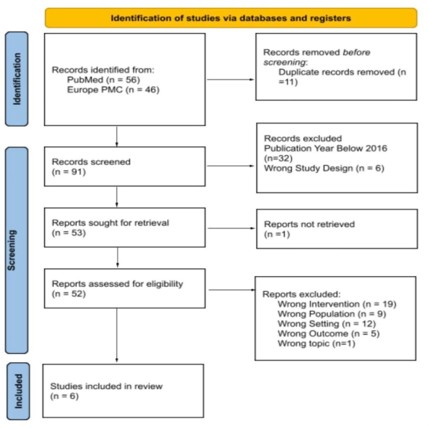
Background: School feeding programmes are among the largest nutrition and social protection interventions in low- and middle-income countries (LMICs). However, foodborne hazards remain a major challenge that may compromise programme effectiveness. As Indonesia expands its Makan Bergizi Gratis (MBG) programme, optimizing Hazard Analysis and Critical Control Point (HACCP) implementation is essential to ensure food safety. Objective: This literature review aimed to synthesize current evidence on HACCP implementation in school feeding programmes and identify evidence-based strategies to optimize food safety in LMICs, with implications for Indonesia’s MBG programme. Methods: A literature review was conducted through a systematic search of the PubMed and Europe PMC databases for studies published between 2016 and 2026. The search strategy was developed using the Population, Intervention, Comparison, and Outcome (PICO) framework, and study selection followed the Preferred Reporting Items for Systematic Reviews and Meta-Analyses (PRISMA) 2020 guidelines. Six eligible primary studies were synthesized narratively, while international guidelines and Indonesian policy documents were reviewed to contextualize the findings. Results: Three major themes were identified: behavioural factors, microbiological contamination, and institutional capacity. The evidence demonstrated that conventional food safety measures were insufficient to ensure consistent food safety performance. Optimizing HACCP implementation required strengthening prerequisite programmes, workforce competency, continuous monitoring, systematic verification, integrated governance, and implementation fidelity. Conclusion: HACCP provides a comprehensive framework for improving food safety in school feeding programmes. The findings support strengthening implementation fidelity, institutional capacity, and multisectoral collaboration to ensure the safe and sustainable implementation of Indonesia’s MBG programme.
Downloads
References
World Health Organization. Five keys to safer food manual. Geneva: World Health Organization; 2006.
Food and Agriculture Organization of the United Nations. School food and nutrition framework. Rome: Food and Agriculture Organization of the United Nations; 2019.
Reza IF. Urgensi penjaminan mutu dalam pelaksanaan program Makan Bergizi Gratis. Jakarta: Badan Gizi Nasional Republik Indonesia; 2025.
Badan Gizi Nasional Republik Indonesia. Pedoman umum program Makan Bergizi Gratis. Jakarta: Badan Gizi Nasional Republik Indonesia; 2025.
Badan Gizi Nasional Republik Indonesia. Pedoman sertifikasi keamanan pangan pada Satuan Pelayanan Pemenuhan Gizi (SPPG). Jakarta: Badan Gizi Nasional Republik Indonesia; 2025.
Tamiru Y, Ayelign A, Mulugeta A, Gebremedhin S. Microbiological safety assessment of ready-to-eat cooked foods in the Addis Ababa School Feeding Program, Ethiopia. Heliyon. 2024;10(21):e38110. doi:10.1016/j.heliyon.2024.e38110.
Sello L, Manyi-Loh C, Manyatsa J, de Smidt O. Assessment of knowledge, attitude, self-reported behavior of food handlers, and the microbial contamination of milk in the school feeding program in Maseru, Lesotho. Ital J Food Saf. 2026;15:12844. doi:10.4081/ijfs.2026.12844.
Canuto IG, da Cunha DT, Buarque PR, de Carvalho IMM. Are socio-economic indicators associated with food safety in public schools? A study in Sergipe State, Brazil. Foods. 2024;13(16):2620. doi:10.3390/foods13162620.
Roberts KR, Paez P, Sauer K, Alcorn M, Johnson DE. Impact of training on employees’ handwashing behaviors in school nutrition programs. J Acad Nutr Diet. 2023;123(5):770-782. doi:10.1016/j.jand.2022.11.009.
Badan Pengawas Obat dan Makanan Republik Indonesia. Pedoman penerapan Hazard Analysis and Critical Control Point (HACCP) pada industri pangan. Jakarta: Badan Pengawas Obat dan Makanan Republik Indonesia.
Bigson K, Essuman EK, Lotse CW. Food hygiene practices at the Ghana School Feeding Programme in Wa and Cape Coast cities. J Environ Public Health. 2020;2020:9083716. doi:10.1155/2020/9083716.
Mgqibandaba PZ, Madilo FK, Du Preez CJ, Mjoka J, Unathi K. Evaluating food safety and hygiene knowledge and practices among foodservice staff of feeding schemes in primary schools in Soweto, South Africa. J Food Saf. 2020;40(4):e12792. doi:10.1111/jfs.12792.
Downloads
Published
How to Cite
Issue
Section
License
Copyright (c) 2026 Journal of Diverse Medical Research : Medicosphere

This work is licensed under a Creative Commons Attribution 4.0 International License.
CC Attribution 4.0





 This journal applies the Creative Commons Attribution 4.0 International License (CC BY 4.0), which permits unrestricted use, distribution, and reproduction in any medium, provided the original author and source are properly credited.